Hopper dredgers play a crucial role in maintaining ports, waterways, and coastal infrastructure by efficiently removing sediment buildup from the seabed. These self-propelled vessels combine power and precision, enabling large-scale dredging, transport, and discharge operations within a single system. However, as global attention shifts toward environmental responsibility, the focus has expanded beyond efficiency to include sediment management, turbidity control, and marine habitat protection. Understanding how hopper dredgers operate, the challenges they face, and the technologies driving sustainable progress is essential for balancing industrial productivity with ecological preservation.
Overview of Hopper Dredger Mechanism
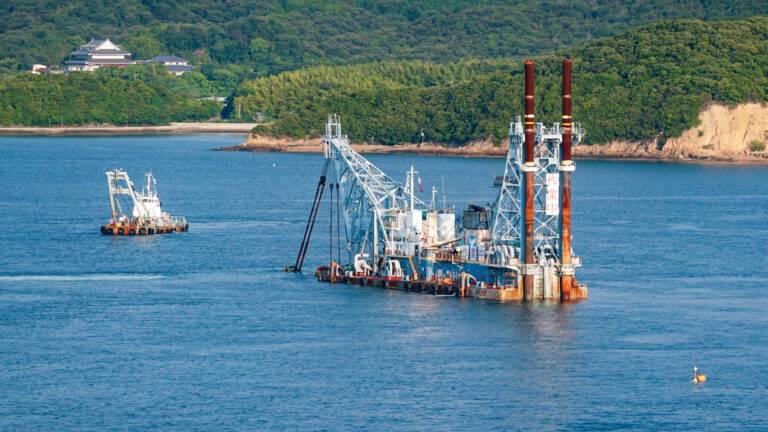
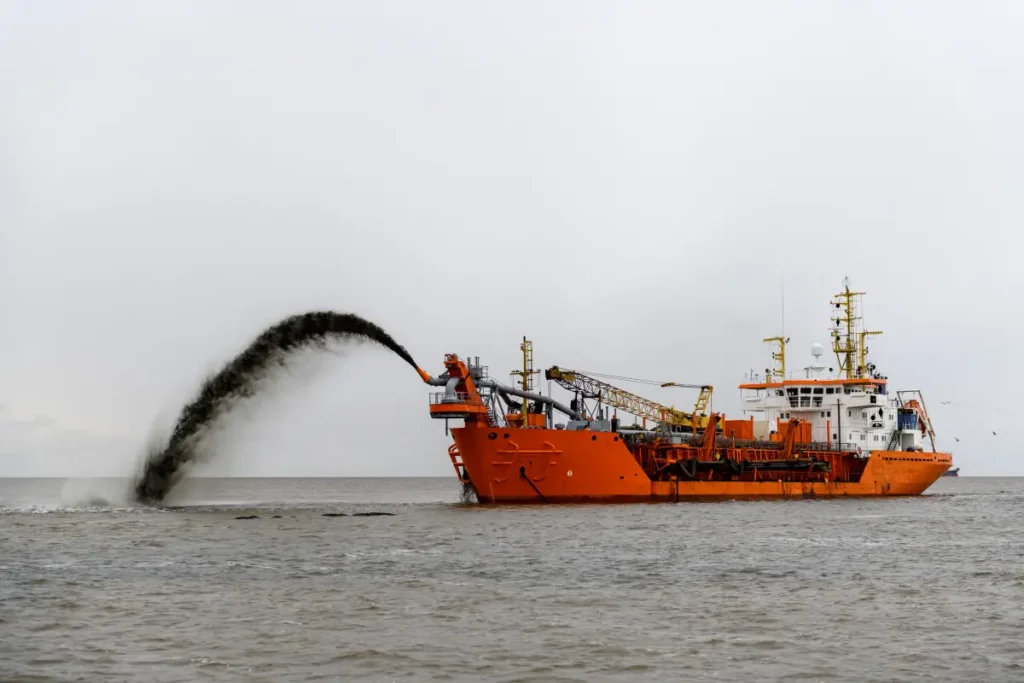
A hopper dredger operates as a self-contained system that performs suction, transport, and disposal of seabed material. The vessel is equipped with a large central hopper for storing dredged sediment and one or two suction arms fitted with dragheads that rest on the seafloor. Through powerful pumps, a mixture of water and sediment is drawn up the suction pipes and deposited into the hopper for temporary containment. The trailing suction hopper dredger, a widely used variant, operates by sailing slowly along a predefined path, continuously removing and storing sediment in motion to maintain uniform dredging depth and coverage.
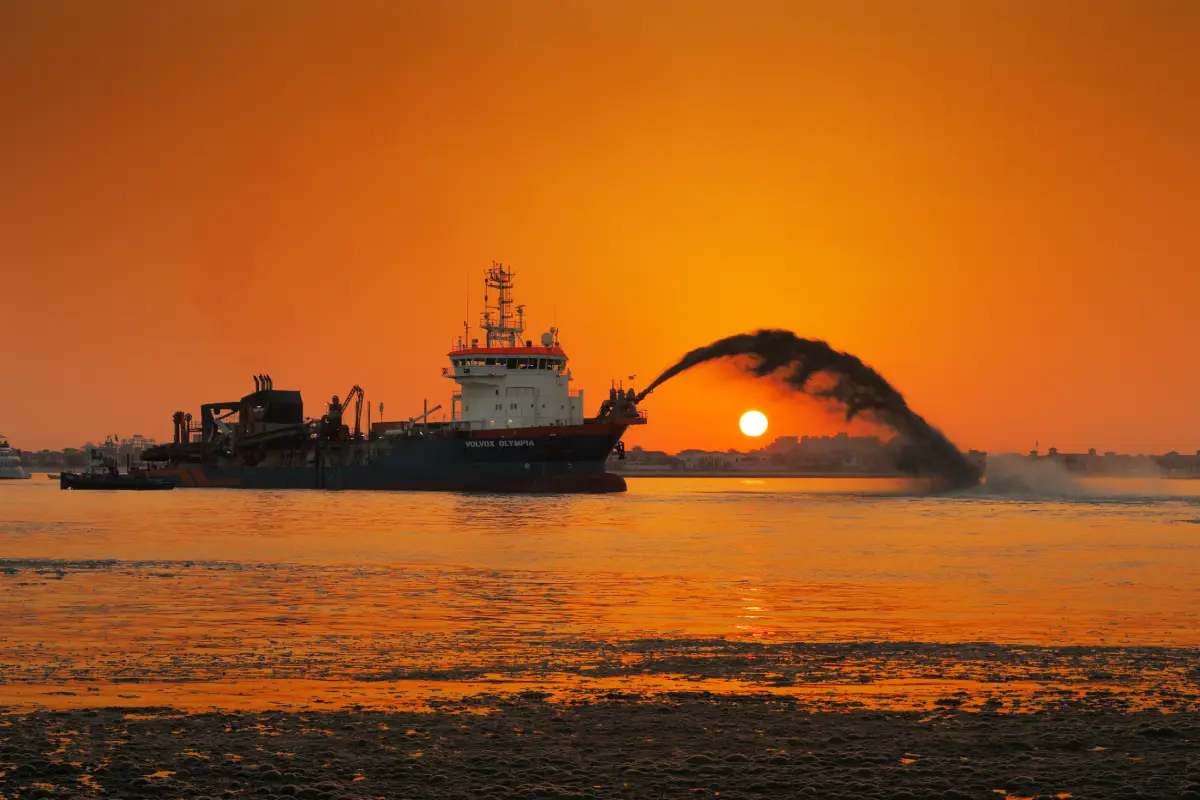
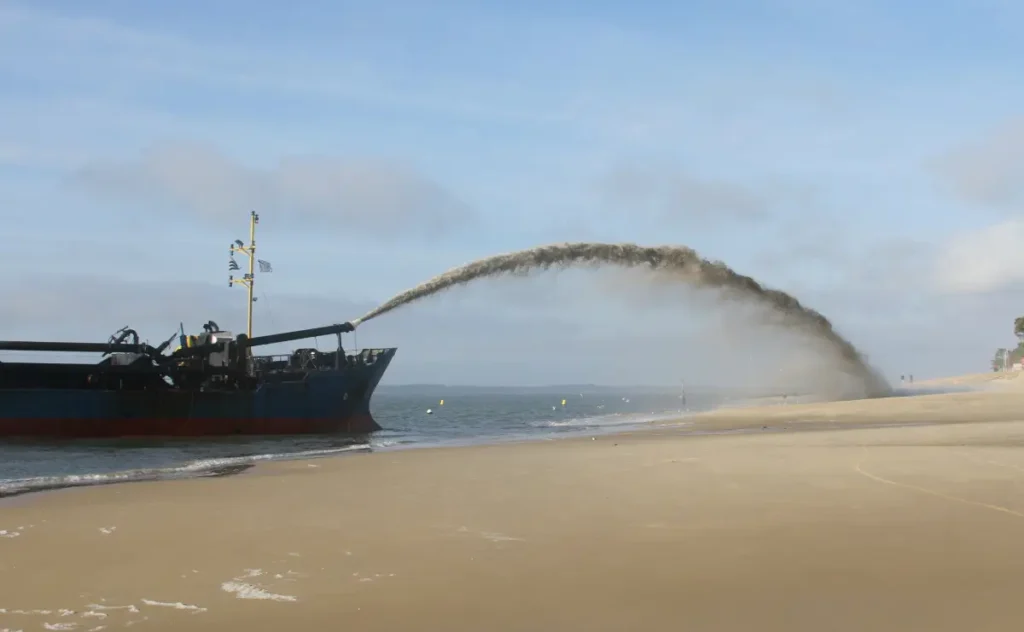
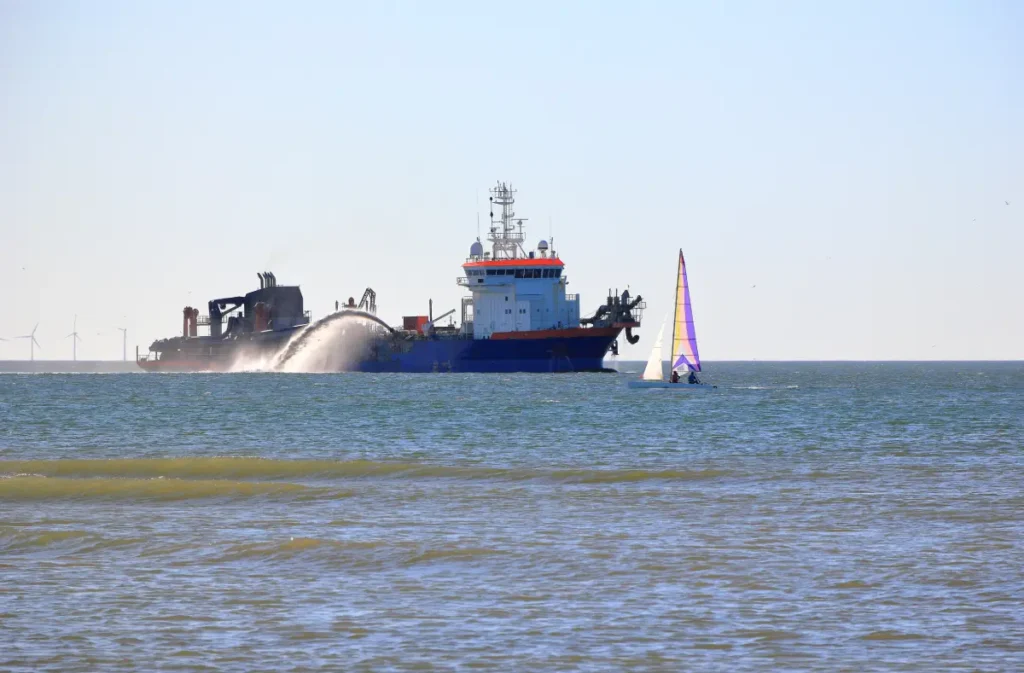
The dredged material can then be released or reused depending on project requirements. Bottom door discharge releases the load directly beneath the vessel, typically used for offshore disposal or deep-water placement. Pump-out discharge uses onboard pumps to move sediment through floating or land pipelines for reclamation, beach nourishment, or containment. Rainbowing, another efficient method, projects the slurry in an arc through a nozzle for precise shoreline placement, ideal for shallow zones or coastal reinforcement. Each discharge technique is selected based on environmental conditions, sediment type, and project objectives to ensure efficient material handling and minimal ecological disruption.
Sediment Characteristics and Operational Challenges
Hopper dredgers handle a variety of sediment types, each influencing how efficiently the vessel can suction, transport, and discharge material. The texture, density, and composition of the seabed determine not only dredging productivity but also environmental outcomes such as turbidity and plume spread. Operators must adapt dredging parameters to match these conditions for consistent performance.
Common Sediment Types
- Sand: Coarse and heavy, easy to settle in the hopper but causes rapid wear on pumps and pipelines.
- Silt: Fine particles that stay suspended longer, increasing turbidity and reducing visibility during dredging.
- Clay: Sticky and cohesive, making it harder to pump and discharge, often leading to blockages in suction lines.
- Contaminated Sediment: Requires specialized handling and disposal methods to prevent harmful substances from dispersing into the surrounding water.
Operational Challenges
- Variations in particle size affect suction flow rate and sediment density, requiring real-time adjustments in drag head pressure and pump speed.
- Mixed materials can cause uneven hopper filling, reduced efficiency, and higher fuel consumption.
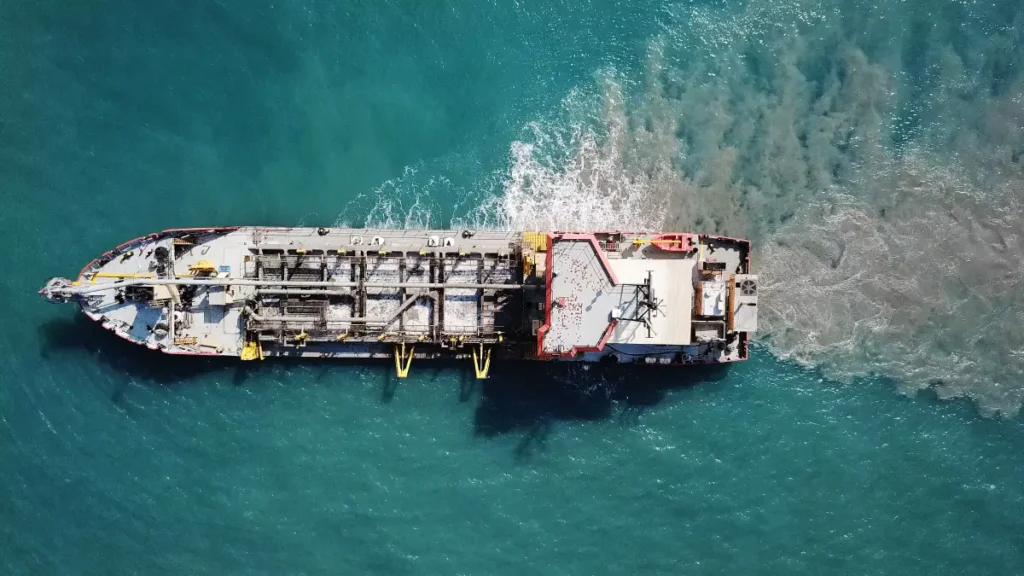
- Overflow discharge from fine sediments can elevate suspended solids, requiring stricter monitoring.
To address these issues, hopper dredging projects rely on advanced sediment analysis and monitoring tools, including grab samplers, core samplers, turbidity meters, and real-time density sensors. These systems help operators predict material behavior, fine-tune dredging speed, and maintain regulatory compliance without compromising throughput or safety.
Key Environmental Impacts of Hopper Dredging
Hopper dredging significantly influences marine ecosystems through sediment disturbance, changes in water quality, and operational emissions. While essential for navigation and reclamation, the process can temporarily alter habitats and ecological conditions if not carefully managed. Understanding these impacts is central to sustainable dredging planning.
Primary Environmental Concerns
- Turbidity and Suspended Solids: The suction and overflow processes release fine sediments into the water, creating plumes that reduce light penetration and disrupt aquatic vegetation and filter feeders.
- Habitat Disturbance: Drag heads disturb the seabed, displacing benthic organisms and altering substrate composition, potentially affecting spawning and feeding areas.
- Noise and Vibration: Continuous dredge pump operation and vessel movement generate underwater noise that may interfere with fish communication and marine mammal navigation.
- Air Emissions: Diesel-powered engines emit nitrogen oxides, carbon dioxide, and particulate matter, impacting local air quality and contributing to greenhouse gas buildup.
Cumulative Effects and Management Needs
Repeated dredging cycles in the same region can lead to long-term habitat modification, biodiversity loss, and sediment compaction. The scale of impact depends on dredging frequency, sediment type, and proximity to sensitive ecosystems. To mitigate these effects, operators integrate real-time monitoring systems, optimize overflow control, and schedule operations during low-sensitivity periods. Combining these strategies ensures that hopper dredging continues to meet project demands while aligning with modern environmental protection standards.
Sediment Management and Mitigation Strategies
Effective sediment management is key to reducing the environmental footprint of hopper dredging operations. Modern dredging programs combine real-time data, predictive modeling, and engineering controls to maintain efficiency while minimizing turbidity and habitat disruption. The focus lies in balancing dredge output with ecological protection.
Key Management Practices
- Turbidity Monitoring: Continuous measurement using sensors and turbidity buoys helps track suspended solids, allowing operators to adjust suction or overflow rates in real time.
- Optimized Drag Head Control: Adjusting the drag head’s position and penetration depth minimizes seabed disturbance and reduces sediment re-suspension.
- Controlled Overflow Discharge: Implementing partial or timed overflow limits the release of fine particles into the water column, maintaining compliance with water-quality standards.
- Use of Environmental Windows: Dredging during specific tidal or seasonal periods reduces impact on fish spawning and migration patterns.
Engineering and Technological Measures
- Application of sediment curtains or silt screens in confined zones to contain turbidity.
- Integration of hydrodynamic modeling to predict plume behavior and plan efficient dredging routes.
- Use of automated hopper management systems to control filling density, prevent overflows, and track sediment properties.
By combining precise operational control with environmental planning, suction hopper dredger operations achieve cleaner dredging cycles, improved water quality, and compliance with international environmental standards.
Sustainable Practices in Modern Hopper Dredger Operations
The transition toward sustainable dredging focuses on reducing emissions, minimizing sediment plumes, and optimizing fuel use without compromising performance. Hopper dredger operators now integrate energy-efficient technologies and environmentally adaptive systems to align with stricter global standards for marine sustainability.
Key Sustainability Measures
- Low-Emission Propulsion: Many modern trailing suction hopper dredgers feature hybrid or dual-fuel engines that lower CO₂ and NOx emissions while improving operational efficiency.
- Energy Recovery Systems: Advanced vessels reuse hydraulic and heat energy from dredge pumps to power auxiliary systems, reducing overall fuel consumption.
- Smart Dredging Automation: AI-based control systems adjust suction rate, drag head depth, and overflow timing based on sediment type, ensuring efficient dredging with reduced turbidity.
- Eco-Friendly Discharge Practices: Controlled release and optimized overflow minimize sediment dispersion, helping maintain water clarity and meet environmental standards.
Additional Sustainable Adaptations
- Use of biodegradable hydraulic fluids and anti-fouling coatings to lower chemical contamination risk.
- Dynamic positioning and route optimization to shorten travel time and reduce fuel burn.
- Incorporation of green dredging certifications and compliance tracking to meet evolving sustainability benchmarks.
Through these integrated practices, hopper dredging continues to evolve toward cleaner, smarter, and more resource-efficient marine operations that support long-term ecological balance.
Environmental Regulations and Compliance Frameworks
Hopper dredging operations must comply with stringent international and regional regulations to minimize environmental impact and ensure safe sediment handling. These frameworks guide dredgers in planning, monitoring, and reporting their activities to maintain ecological balance and legal accountability.
Major Regulatory Standards
- MARPOL (International Convention for the Prevention of Pollution from Ships): Governs the discharge of pollutants, fuel emissions, and waste management from dredging vessels.
- OSPAR Convention: Sets environmental protection rules for the North-East Atlantic, emphasizing dredged material quality and the selection of disposal sites.
- London Convention and Protocol: Regulates the dumping of dredged materials at sea, requiring environmental assessments before disposal.
- Regional and National Guidelines: Port authorities and coastal regulators impose additional permits, sediment testing, and monitoring requirements based on local conditions.
Compliance and Monitoring Measures
- Pre-Dredge Environmental Impact Assessments (EIA): Evaluate sediment composition, contamination levels, and ecosystem sensitivity prior to operations.
- Post-Dredging Surveys: Use hydrographic and biological monitoring to confirm restoration of seabed conditions.
- Automated Reporting Systems: Record turbidity data, dredging depth, and discharge locations for transparent compliance tracking.
- Independent Audits: Environmental agencies often verify records and sampling data to ensure adherence to established standards.
Together, these frameworks create a structured system that ensures every suction hopper dredger operates within clear environmental boundaries, promoting responsible and traceable dredging activity.
Technological Innovations Enhancing Eco-Efficiency
The evolution of hopper dredging technology focuses on achieving higher precision, lower emissions, and reduced environmental disturbance. Innovations in automation, sensor integration, and data analytics have transformed traditional dredging into a smarter and more adaptive process.
Emerging Technologies in Hopper Dredgers
- Automation and AI-Based Control Systems: Intelligent algorithms adjust suction rates, drag head depth, and overflow timing in real time to minimize sediment re-suspension and fuel waste.
- Digital Twin Modeling: Simulated dredging environments allow operators to test suction efficiency and predict plume behavior before deployment.
- Advanced Hopper Flow Sensors: Measure sediment density and water content continuously to optimize hopper filling and discharge control.
- Real-Time Environmental Monitoring: Integrated turbidity meters, acoustic sensors, and GPS systems track the dredger’s impact footprint and ensure compliance with regulatory thresholds.
Operational Efficiency Enhancements
- Use of energy-efficient pump drives and variable frequency motors to reduce fuel demand.
- Remote diagnostics and predictive maintenance that detect early wear on pumps and pipelines, cutting downtime and repair waste.
- Autonomous positioning and route optimization systems that calculate the shortest, most energy-saving dredging paths.
These innovations collectively improve control, accuracy, and environmental performance, enabling modern hopper dredgers to operate at maximum productivity with minimal ecological impact.
Collaborative Marine Environmental Stewardship
Sustainable hopper dredging relies on cooperation among dredging contractors, regulatory agencies, scientists, and local communities. Collaboration ensures that operational objectives align with environmental preservation, fostering transparency and shared responsibility across all project stages.
Key Areas of Collaboration
- Joint Environmental Monitoring: Dredging firms often partner with marine biologists and monitoring teams to track turbidity, sediment dispersion, and ecological recovery in real time.
- Stakeholder Engagement: Early consultation with port authorities, fisheries, and environmental groups helps identify sensitive habitats and establish acceptable dredging windows.
- Knowledge Sharing and Training: Workshops and joint programs promote the adoption of sustainable dredging practices, improved data collection, and consistent environmental reporting methods.
Industry-Led Sustainability Efforts
- Participation in green dredging initiatives and international forums that develop low-impact technologies and eco-certification standards.
- Development of open-access environmental data platforms for transparency and regulatory collaboration.
- Encouraging cross-sector innovation, where lessons from energy, shipping, and environmental engineering industries are integrated into hopper dredger design and operation.
By building collective accountability, the dredging industry strengthens its role as an active partner in marine ecosystem protection, ensuring that development and conservation progress hand in hand.
Conclusion: Advancing Sustainable Hopper Dredging
As demand for efficient, environmentally responsible dredging continues to rise, innovation and collaboration will define the next generation of hopper dredger operations. From advanced sediment control systems to emission-reducing propulsion technologies, the industry is moving toward a future that prioritizes both performance and sustainability. At Dredge Pennsylvania, we combine experience, engineering expertise, and environmental awareness to deliver dredging solutions that protect marine ecosystems while meeting complex project goals. We are committed to driving progress through smarter, cleaner, and more sustainable dredging practices across every project we undertake.